



How Accurate Is Facia Liveness Detection for Face Verification?
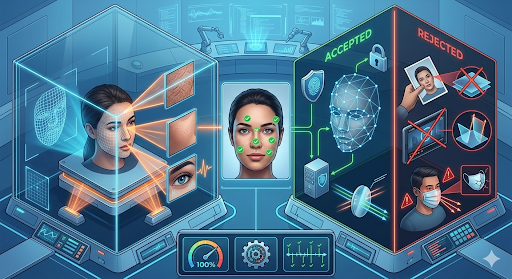

In the modern digital era, identity verification has become an essential part of secure online interactions. Organizations across industries, from finance and healthcare to e-commerce and government services, require reliable methods to ensure that users are who they claim to be. Traditional verification methods such as passwords, PINs, or ID checks are increasingly vulnerable to fraud, making biometric authentication a preferred solution. Among these, liveness detection for face recognition has emerged as a critical technology that verifies whether a person is physically present during verification rather than relying on photographs, videos, or synthetic media.
Facia Liveness Detection is one such solution that leverages advanced artificial intelligence and computer vision techniques to enhance face verification processes. Understanding the accuracy, strengths, and applications of this technology is vital for businesses and organizations seeking to adopt secure and scalable identity verification systems.
You can also read about how long until a tooth infection kills you.
Understanding Liveness Detection for Face Verification
Liveness detection is a biometric security technique designed to differentiate a live human face from a static image, video, or artificially generated content. This is particularly important in face verification systems, as attackers often attempt to bypass security measures using stolen photos, videos, or AI-generated deepfakes.
Facial Liveness Detection integrates sophisticated algorithms to analyze facial micro-expressions, subtle head movements, and skin texture variations to determine if the user is physically present. These systems use both active and passive detection methods. Active liveness detection may prompt the user to perform certain actions such as blinking or turning their head, whereas passive systems analyze natural behaviors without requiring explicit input.
The combination of these techniques enables face recognition systems to accurately verify identity while minimizing the risk of spoofing or impersonation attacks.
Key Factors Influencing Accuracy
The accuracy of liveness detection for face verification depends on several technical and environmental factors:
1. Quality of Facial Data
The clarity and resolution of facial images captured during verification significantly affect system performance. Cameras capable of high-resolution imaging capture subtle facial features more effectively, which enhances the precision of liveness checks. In low-light or poor-quality imaging conditions, even advanced systems may face challenges in detecting micro-expressions or skin texture variations accurately.
2. Algorithm Complexity
The accuracy of a liveness detection system is strongly influenced by the underlying AI models. Facia liveness technology leverages deep learning algorithms trained on diverse datasets to recognize a wide range of facial characteristics, expressions, and angles. This reduces the likelihood of false positives, where a spoofing attempt is mistakenly recognized as live, and false negatives, where a legitimate user fails verification.
3. Environmental Conditions
External factors such as lighting, camera angle, and background can impact the performance of face recognition liveness detection systems. Advanced implementations, including Facia Liveness Detection, employ adaptive algorithms that compensate for variations in lighting and angles to maintain consistent accuracy across different conditions.
4. Spoofing Complexity
Attackers use increasingly sophisticated methods, such as 3D masks, deepfakes, and video replays. The ability of a liveness detection system to detect these complex spoofing attempts is a critical determinant of accuracy. Systems integrating face recognition liveness detection often combine multiple verification layers, including 3D depth mapping, micro-expression analysis, and AI-driven behavioral cues, to enhance robustness against advanced fraud techniques.
Measuring Accuracy in Liveness Detection
Accuracy in liveness detection is typically measured in terms of true positive rate (TPR) and false acceptance rate (FAR).
- True Positive Rate (TPR): The percentage of legitimate users correctly identified as live. High TPR indicates effective verification and low likelihood of rejecting valid users.
- False Acceptance Rate (FAR): The percentage of spoof attempts mistakenly accepted as live. A low FAR is crucial for preventing fraud and ensuring system reliability.
Facia Liveness Detection uses sophisticated machine learning models that have been tested against large and varied datasets to achieve high TPR while maintaining a low FAR. Incorporating both facial recognition algorithms and liveness checks ensures that the system can accurately distinguish between live humans and spoofing attempts under diverse real-world conditions.
Applications of Accurate Liveness Detection
The accuracy of liveness detection directly influences its effectiveness across various industries.
Financial Services
Banks and fintech companies employ liveness detection for account opening, KYC compliance, and high-risk transactions. Accurate face verification prevents unauthorized access and reduces the risk of financial fraud. By integrating liveness detection for face recognition, institutions can ensure that users completing online onboarding are genuinely present, protecting both the organization and its customers.
Healthcare
In healthcare, patient identification is critical for secure access to medical records, telemedicine, and prescription management. Accurate liveness detection ensures that patient identity is verified correctly, preventing errors or unauthorized access while maintaining compliance with privacy regulations.
E-Commerce and Retail
E-commerce platforms use face recognition services and liveness detection to secure online payments, prevent account takeovers, and ensure age verification for restricted products. High accuracy in liveness checks improves the customer experience by reducing verification failures and preventing fraudulent transactions.
Corporate Security
Organizations deploy face recognition solutions and liveness detection to manage secure access to physical locations and digital systems. Accurate verification reduces risks associated with unauthorized entry, ensuring employee and corporate safety.
Enhancing Accuracy with Facia Liveness Technology
Facial liveness technology employs several advanced techniques to maximize accuracy:
- Multimodal Analysis: Combining multiple features such as depth perception, micro-expressions, and texture analysis provides robust verification.
- AI-Powered Detection: Deep learning models trained on extensive datasets enhance system resilience against spoofing attempts.
- Adaptive Algorithms: Dynamic adjustment to environmental factors, such as lighting or camera angle, improves verification performance.
- Passive Liveness Detection: Enables seamless verification without user interaction, reducing friction and increasing the likelihood of successful authentication.
These features ensure that liveness face recognition systems provide reliable performance across diverse real-world scenarios.
Benefits of High Accuracy Liveness Detection
Accurate liveness detection for face verification offers numerous benefits to businesses, including enhanced security, fraud reduction, regulatory compliance, improved user experience, and operational efficiency. By implementing precise liveness detection, organizations enhance trust, protect assets, and maintain efficient workflows.
Challenges and Limitations
Despite its advantages, liveness detection faces challenges. Environmental variability such as low light or crowded backgrounds may affect detection accuracy. Older cameras or devices may not support depth sensing or high-resolution capture. Privacy concerns are also critical, as storing and processing biometric data must comply with strict regulations. Additionally, attackers continually develop sophisticated methods to bypass security, requiring regular updates to AI models. Understanding these challenges allows organizations to deploy face recognition liveness detection systems effectively while maintaining accuracy and compliance.
The Future of Liveness Detection in Face Verification
As digital services continue to expand, the need for accurate identity verification will grow. Future advancements in liveness detection include integration with multimodal biometrics such as voice, iris, and behavioral analysis; enhanced AI algorithms for detecting deepfakes and advanced spoofing methods; privacy-preserving verification methods that protect sensitive biometric data; and broader adoption of passive, contactless verification for seamless user experiences. Facia Liveness Detection represents a step toward these innovations, providing a scalable and accurate solution for modern identity verification challenges.
You can also read about pedro vaz paulo.
Conclusion
The accuracy of liveness detection is fundamental to the effectiveness of face verification systems. Facia Liveness Detection and related face recognition liveness detection solutions offer robust mechanisms to confirm user presence, prevent fraud, and maintain compliance with regulatory standards. By leveraging advanced AI algorithms and passive verification techniques, these systems achieve high true positive rates while minimizing false acceptances.
Businesses across finance, healthcare, retail, and corporate sectors benefit from accurate liveness detection by improving security, streamlining onboarding, and enhancing user trust. As threats evolve and technology advances, the continued development of liveness detection for face recognition will remain a cornerstone of secure digital interactions, ensuring that identity verification remains reliable, efficient, and trustworthy.