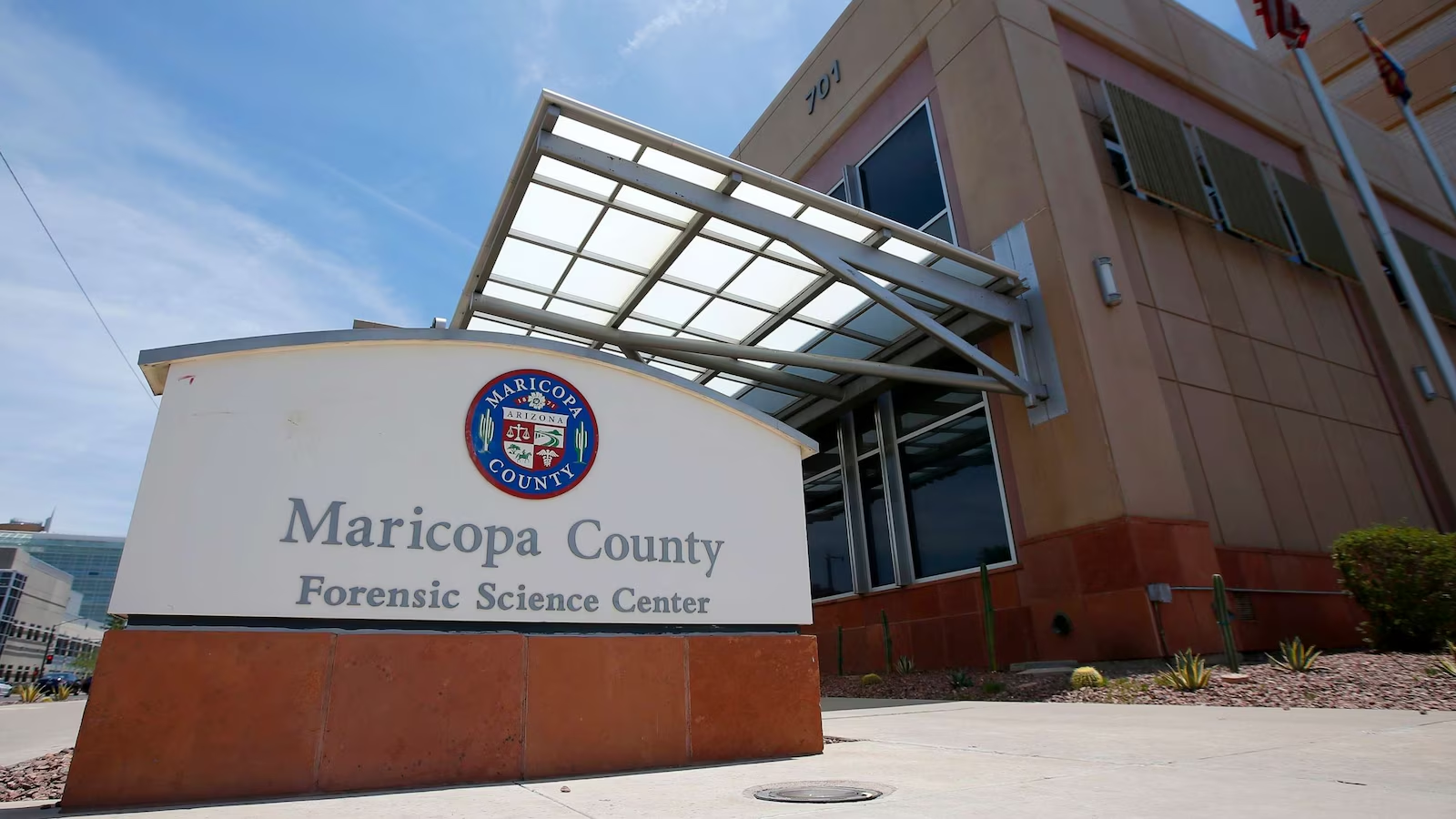




Maricopa Medical Examiner: A Guide for Families
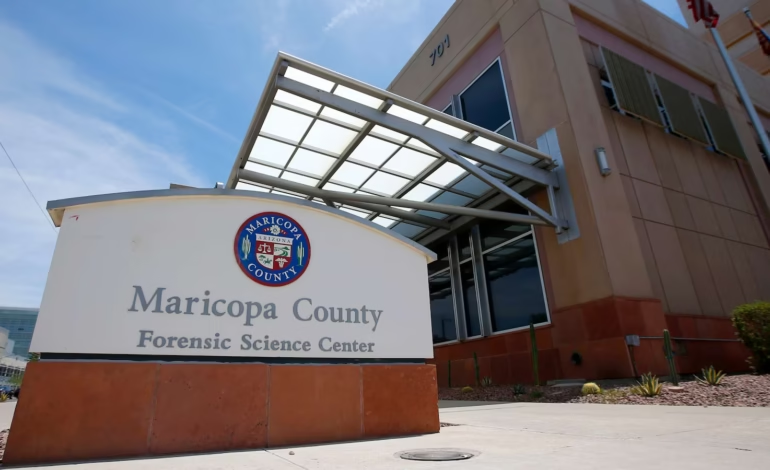

Losing someone is bad enough for him personally. However, when a loss of life is sudden, accidental, or unexplained, families are usually left to go through another layer of confusion. Who’s in charge now? Why is the health professional concerned? When can we prepare for the funeral? Where can we get the answers?
If you have observed yourself trying to locate the Maricopa County Medical Examiner, you are apparently going through one of the most difficult moments of your existence. You also just learned that the passing of a loved one was mentioned in this office, and you have questions that no person has yet fully clarified.
This guide is here to help with just that. It goes through what the Maricopa County Office of the Medical Examiner does, why it may be involved, what families can expect at some stage of the investigation, and how to find professional reports, case examples, and obituaries.
The goal is simple: to provide clean, discreet information in manageable chunks, with fast delivery. Responses to scattered resources in bereavement should not be dismissed.
We will discuss office procedures, research techniques, how autopsies work, and steps to purchase the records you want. Throughout, note that the office has a team of workers, including a family advocate, dedicated to supporting families in this way. You don’t necessarily have to let me guide it.
Maricopa Medical Examiner Strategic Executive Summary
This brochure explains how the Maricopa County Medical Examiner’s Office works and how households can discover the facts and records they want at some stage during a difficult time.
You understand the office situation first. The medical examiner investigates and certifies certain deaths under Arizona law, and determines the cause and manner of death in cases that meet certain crime standards.
You will analyze which deaths fall under her jurisdiction. Arizona laws require that certain deaths, including those that may be violent, unexpected, or unexplained, be reported and investigated through a medical examiner.
The booklet walks class-by-class through the search process, including how to review examples, the different types of tests, and what households can expect in terms of timelines and photos.
You can also read about Ray Liotta Net Worth.
You also get a practical handle on the documents that are most needed in the world. This includes how to check the popularity of the case, how to request a medical examiner’s report, and a special way to obtain dying certificates.
Most importantly, you discover a compassionate, clear path for a period of amazing time. From expertise on what “pending” means on death certificates to coordinating your favorite publication, this guide seeks to make navigating a complicated process a little less complicated while pointing you to authoritative sources for the most up-to-date information.
What the Maricopa County Medical Examiner Does
The Maricopa County Medical Examiner’s Office investigates and certifies deaths in Arizona that fall under its jurisdiction. Determines the cause and course of death in cases involving shocking, unexpected, violent, and unexplained circumstances.
It allows you to understand the purpose of the office, which makes the path much less mysterious.
The medical examiner’s office, known in various places as the coroner from time to time, is a county workplace staffed by Maricopa County Coroners. It serves a large school district and receives close to 10000 reviews of deaths each year.
Its main task is to investigate the treatment of some dead people. This method identifies the cause of death, the medical purpose of someone dying, the manner of death, herbs, twists of fate, or other categories of circumstances such as those described in the law.
Importantly, the office is best considered when loss of life meets individual legal requirements. He doesn’t see every death in the county. Many deaths, including deaths of people under the ongoing care of a physician, are allowed to use an attending health professional as a substitute.
The pictures are made for the benefit of the general public. By investigating these deaths, the workplace facilitates the network’s understanding of how and why humans die, which can reveal trends and inform you of efforts to prevent future deaths. For families, it provides valid answers and documentation that a loved one has passed away.
Which Deaths Fall Under Its Jurisdiction
Under Arizona regulations, certain deaths must be reported to the medical examiner. These include violent death, sudden or unexplained death, death of human beings who are not under health care, and death in custody.
Knowing the causes of workplace anxiety can alleviate some of the confusion among families.
The Arizona Revised Statutes provide for specific categories of deaths that require an investigation. These are usually deaths caused by violence, unexpected or unexplained deaths, and the death of a person who is no longer available for state-of-the-art care by a health care provider.
Other categories include the death of a person in custody, the unexpected or unexplained loss of life of a child or infant, a death believed to be related to the person’s career, a death that may pose a public health risk, or a death that occurs sometimes or is caused by surgery or anesthesia.
When a death occurs under those circumstances, it is reported to the office through the police, medical companies, or various responsible parties. The office then reviews the facts and decides whether the case falls under its jurisdiction.
If the case meets the criminal standards, the workplace assumes the obligation to investigate and prove. If this is not the case now, the case may be referred back to the attending physician or other appropriate certifier. This level of testing ensures that the workplace focuses its resources where required by law.
The Investigation Process Explained
When the medical examiner takes over, he gathers records from the regulatory authority, clinical records, and various assets to determine the cause and manner of death. Every case is investigated by me, and no longer do all require an autopsy.
Families often need to understand what happens next, and the method follows a popular pattern.
When death is proposed, the office issues an opinion on the circumstances to determine whether it has jurisdiction. If so, clinical research is initiated, collecting data from regulatory agencies, first responders, clinical data, and healthcare providers.
The medical examiner can then decide what level of investigation each case requires. This is decided on an individual basis, based on certain statistics collected. Not all cases require an autopsy, and not every case requires a complete autopsy.
If the test is deemed critical, the frame will be moved to an office facility in Phoenix. There, an examination is completed through a doctor who specializes in forensic pathology.
This system allows households to match detailed requests or concerns with the investigator assigned to the case. While the office will take into account the needs of survivors, it cannot consistently accommodate every request due to legal requirements and resource constraints. It is still recommended that you state your wishes in advance, and the designated interrogator is your federal representative.
Autopsies and Examinations
The medical examiner’s office conducts 3 types of examinations: complete autopsy, partial autopsy, and external examination. The medical examiner decides which type is desired based entirely on the examination.
Understanding test types can help respond to a not uncommon source of fear.
There are three types of workplace testing. The entire autopsy is mostly complete. A partial autopsy is also limited in scope. External examination includes the analysis of the body without an internal autopsy. The medical examiner decides that it is at least appropriate based on the data gathered throughout the examination.
It is important to note that autopsies are not performed consistently, even if requested by the family or health care provider. Due to legal parameters and resource constraints, the decision rests with the medical examiner.
Testing may also include toxicological screening, which detects drugs or toxins in biological tissues. This forensic test is more accurate and complete than a well-known clinical drug test, and can take time to complete.
A common noticeable issue is whether or not the study will have an impact on funeral arrangements, primarily open casket viewing. The Bureau’s guidance explains that the Bureau’s procedures generally do not protect you as an open casket provider. Your chosen funeral director supplier is best able to get and prepare the framework for them to suggest how your loved one can be offered.
How to Check Case Status
Families can check the status of a case through the medical examiner’s office’s online tool. This gives you music where one episode lasts all the way through the survey.
During research, households clearly want updates, and there is a means for this.
The workplace provides a web language popularity tool where you could look for statistics about the language. This is often the fastest way to see which items are available without having to call again and again throughout an already annoying time.
Case popularity tools are particularly useful because testing can be time-consuming, especially when considering additional testing, such as toxicology. Being able to check in online gives families a measure of the detailed clarity of the process.
If you have questions that the online tools do not answer, the agency’s administrative staff can help. The investigator assigned to the case is also the key touchpoint for case-specific questions.
For a state-of-the-art language reputation portal and the most up-to-date facts, it is great to go immediately to the reliable county website of the workplace, as online structures and links are updated over the years. A reliable location is the most reliable source for their equipment.
How to Request a Medical Examiner Report
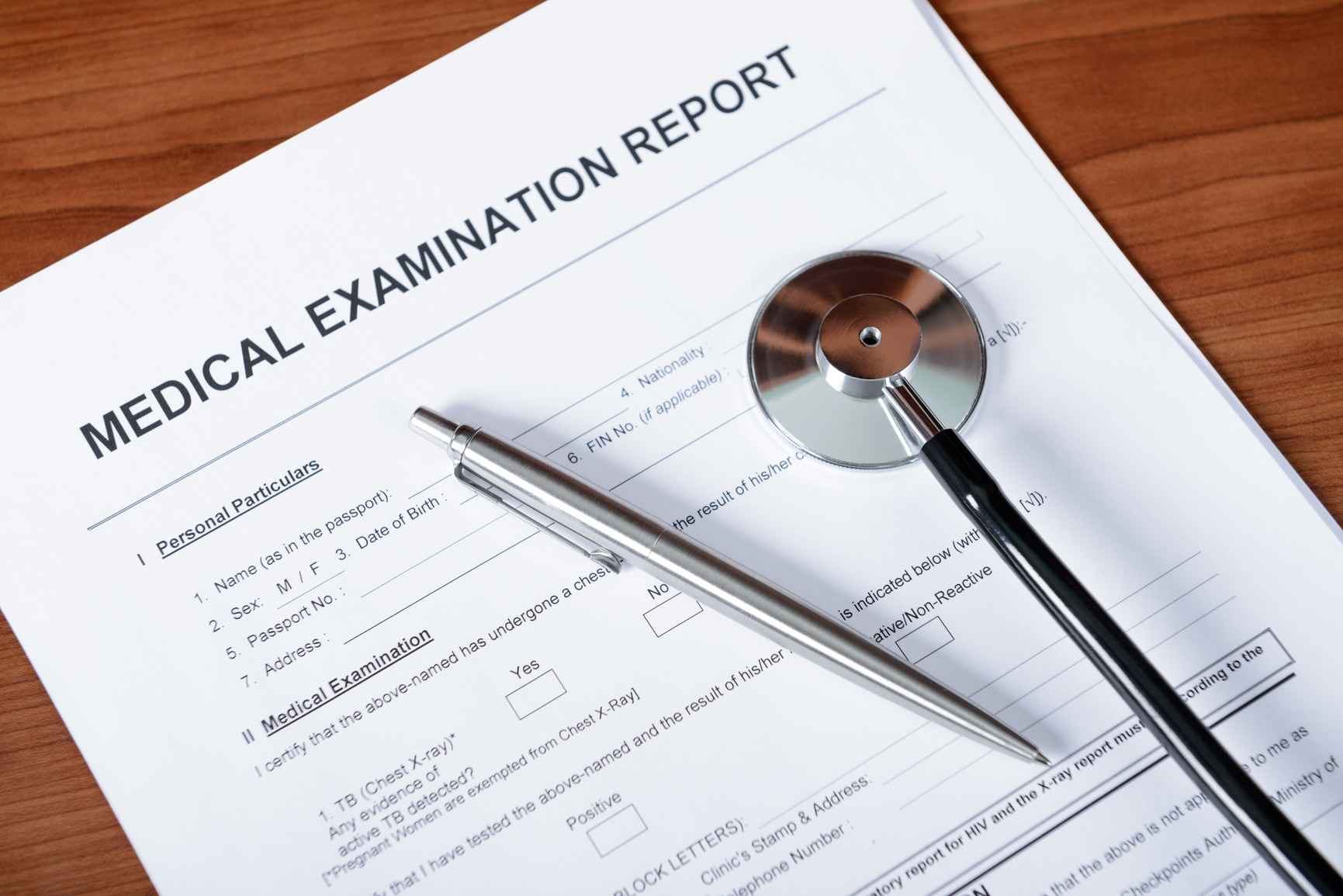
Households complete a public records request form to request a copy of the medical examination report. According to the relative, there is no value in the prison or a digital copy of a document.
The medical examination report is not like a death certificate, and families regularly want it for various purposes.
To obtain a copy of a document, you must complete a Public Records Request form through your workplace. This is the formal way of accessing documents produced with the help of research.
Helpfully, there is no cost to obtain a copy of the report if you are close to a prison or if you request a digital version. This makes the program available to families in need without the added financial burden during difficult times.
You can also contact the administrative support service at your workplace by telephone to request a copy of the file. They can guide you on what is desired and how to handle the request.
Keep in mind that, similarly, the report can be listed as pending at the same time the campaign or survey is in progress. In one case, the comprehensive file with the most final purpose and manner of death is completed shortly after the investigation is completed. The reliable county internet site has current application paperwork and reservations.
How to Obtain a Death Certificate
A death certificate is obtained one at a time from the medical examiner’s report, through the Maricopa County office’s vital records, or through your funeral director, not all at once from the medical examiner’s office.
This is one of the most common points of confusion, so it’s worth explaining.
The medical examiner doesn’t just bother with the death certificate anymore. Instead, the workplace is generally responsible for completing the clinical portion of the certificate within 72 hours of the exam, excluding weekends and holidays.
To find a valid death certificate, you go through your specific funeral home or mortuary without delay, or through the Maricopa County Department of Public Health, Office of Vital Records. Funeral homes often help families order death certificates as part of their offer.
In addition, you will receive a death certificate marked as pending. This occurs when the preferred motive and manner of death cannot be immediately determined, thus requiring further investigation. Importantly, a pending death certificate is still a criminal certificate of death, and it can also be given to certain insurance companies and financial institutions to deal with benefits or loan money.
When the examination is completed, the change will be submitted to the vital registry together with the final purpose and manner of death. For accuracy, fees, and concurrent order types, consult your county’s legal vital records resource.
Support for Families During the Process
The workforce recognizes that families go through surprisingly difficult joy, and offers this guidance beyond just office work.
A key useful resource is the family advocate, a member of the workforce committed to supporting households to navigate the process. A family advocate can help with questions and, at times, with issues such as handling death benefits if the cause of loss of life is still pending.
Your loved one will be released after the medical examination is complete. To begin this process, family members contact the legitimate aftercare provider, which includes a funeral home, mortuary, or cremation company, which then coordinates the discharge with the workplace on behalf of the survivors.
Additionally, it is important to note that the workplace as a correctional facility does not currently allow visits to residences at its facility. Any introduction ends with a snapshot of the preference for a male or female philosophy. Families wishing to see their loved one must coordinate with the funeral director.
All of this allowed you to work on questions. The working class knows the burdens of which houses are playing and has the ambition to provide compassionate solutions.
You can also read about Poppy Flower.
Frequently Asked Questions
Q: Why is the Medical Examiner involved in my loved one’s death? A: Arizona law requires certain deaths, such as violent, unexpected, or unexplained deaths, to be investigated by the Medical Examiner. The office determines the cause and manner of death in these cases.
Q: How long does an autopsy or investigation take? A: It varies by case. While an examination may be completed relatively quickly, additional testing, such as toxicology, can extend the timeline, and a case may remain pending until the investigation concludes.
Q: What does “pending” mean on a death certificate? A: It means a final cause and manner of death haven’t been determined yet, often because further testing is needed. A pending death certificate is still legal proof of death.
Q: How do I get a copy of the Medical Examiner’s Report? A: Complete a Public Records Request form through the office. There is no fee for legal next of kin or for an electronic copy. The official county website has the current form.
Q: How do I get a death certificate? A: Death certificates come from the Maricopa County Office of Vital Registration or through your funeral home, not the Medical Examiner directly. The office only completes the medical portion.
Q: Will an autopsy prevent an open-casket funeral? A: Typically, no. The office’s procedures do not usually prevent an open-casket viewing. Your funeral service provider can advise on presentation once they’ve prepared your loved one.
Q: Can I view my loved one at the Medical Examiner’s facility? A: No. As a forensic setting, the facility does not permit viewing of remains, and identification is done by photograph. Viewing arrangements should be coordinated through your funeral provider.
Conclusion: Finding Answers During a Difficult Time
Navigating the absence of a loved one is never easy, and dealing with an examination by a medical examiner adds questions about the worst possible moment. Hopefully this booklet has made the process a little easier.
Not to forget, the main things are them. The Maricopa County Medical Examiner’s Office investigates certain deaths required under Arizona law, and a medical examiner’s report determining the cause and manner of death, as well as a death certificate, is obtained through a special strategy. And there may be support, which is a family advocate who helps you.
If you need documentation, the path is clear. Request a medical examiner’s report through a public records request, and obtain death certificates from the vital registration office or through your funeral home. For language updates, the online language popularity machine can help.
The important thing is that you don’t have to understand the whole thing all at once. Take it one step at a time, trust your funeral director for handling, and contact the office staff when you have questions.
For the most up-to-date contact information, bureaucracies, and case popularity tools, please visit the Maricopa County reliable Internet site, as those resources have been updated over the years. This is the most reliable source as you go through this process.
If you are going through this loss right now, be gentle with yourself, and don’t hesitate to rely on your family, friends, or grief counselor for emotional burdens that paperwork cannot carry.